Libya’s energy system begins with an unusual contradiction. The country holds Africa’s largest proven crude oil reserves and produces far more energy than its small population consumes, yet its homes and businesses have often faced electricity cuts, fuel shortages and weak public services. The problem is not a lack of resources. It is the difficulty of maintaining pipelines, power stations, refineries and transmission networks across a politically divided country.
Oil remains the center of Libya’s economy, while natural gas supplies most of its electricity and connects the country to Europe. Coal has almost no role, nuclear energy is limited to scientific research, and renewable power remains at an early stage despite excellent solar conditions. Libya’s long-term energy challenge is therefore not simply to produce more fuel. It is to turn its resource wealth into a reliable domestic energy system.
Oil Wealth Still Defines Libya’s Economy
Few countries depend on oil as heavily as Libya. At the end of 2024, the country held about 48.4 billion barrels of proven crude oil reserves. This was more than any other African country and represented a large share of the continent’s total reserves. Libya’s crude is also attractive to international buyers because much of it is light and low in sulfur, making it easier for many refineries to process.
Oil production has recovered from some of the severe disruptions that followed the political crisis and armed conflict after 2011. Libya produced an average of 1.374 million barrels of crude oil per day in 2025, its highest annual average in a decade. Total production reached approximately 501 million barrels during the year. [1]
These figures show both the strength and the weakness of Libya’s oil industry. The country can raise production quickly when fields, pipelines and export terminals operate normally. However, output can also fall when political groups close facilities, workers protest, budgets are delayed or armed conflict threatens infrastructure.
Oil exports provide most of Libya’s foreign income. OPEC reported that petroleum exports were worth about $28.7 billion in 2024, compared with roughly $32.3 billion in total merchandise exports. This leaves public finances, imports and government spending closely tied to global oil prices and the uninterrupted operation of the energy sector. [2]
Desert Oil Fields Depend on Coastal Infrastructure
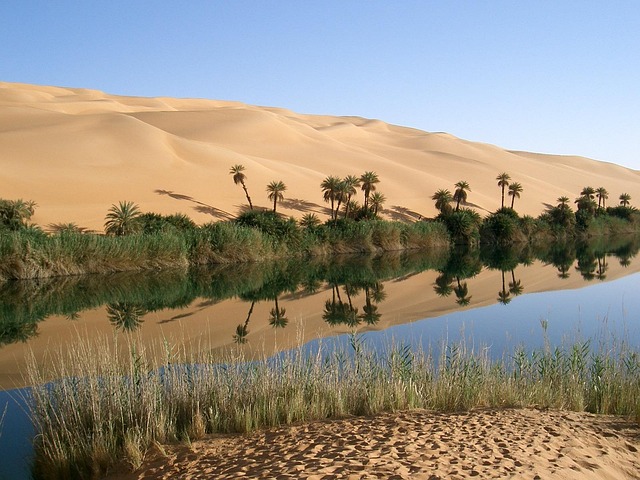
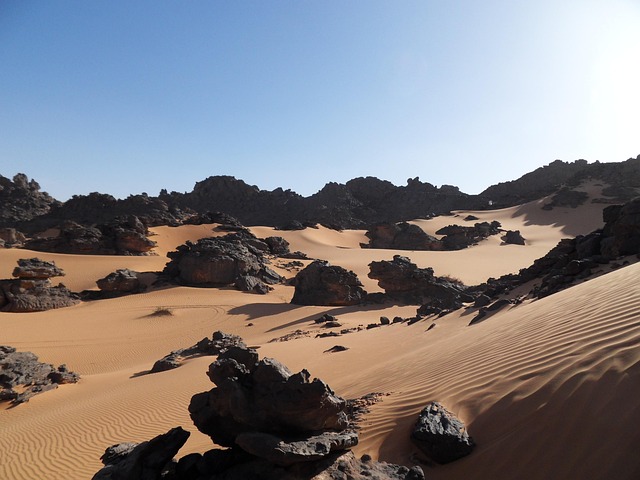
Libya’s energy geography explains why infrastructure is so important. Most of the population lives along the Mediterranean coast, especially around Tripoli, Misrata and Benghazi. Many of the country’s largest oil and gas fields, however, are located far inland in the Sahara.
The Sirte Basin in central and eastern Libya is the country’s most important producing region. It contains major fields operated by companies such as Waha Oil Company, Arabian Gulf Oil Company and Sirte Oil Company. Crude moves through long pipeline systems to coastal export terminals including Es Sider, Ras Lanuf, Zueitina, Brega and Marsa el-Hariga.
The Murzuq Basin in southwestern Libya includes the Sharara and El Feel fields. These fields are economically important, but their remote locations create security and transport risks. The Ghadames Basin in western Libya contains both oil and natural gas resources and connects with infrastructure near the Algerian and Tunisian borders.
This structure means that Libya’s oil system depends on several linked assets: desert wells, gathering systems, pumping stations, pipelines, storage tanks and Mediterranean ports. A shutdown at one point can affect the entire supply chain. A producing field has limited value if crude cannot reach an operating export terminal.
Extreme heat, sand, long distances and limited local services also raise maintenance costs. Libya must protect and repair infrastructure across one of Africa’s largest national territories, even though its population and technical workforce are concentrated in a narrow coastal zone.
Libya Produces Crude but Imports Refined Fuel
Libya’s position as a major oil producer does not mean it is self-sufficient in petroleum products. The country has several refineries, including facilities at Ras Lanuf, Zawiya, Tobruk, Sarir and Brega. Their combined nameplate capacity is substantial, but actual production has often been far below that level because of maintenance problems, damage, technical limits and periods of closure.
OPEC reported nominal Libyan refining capacity of about 666,000 barrels per day in 2024, but refinery throughput averaged only around 132,000 barrels per day. As a result, Libya exports crude oil and then imports large quantities of gasoline and diesel. [2]
This is one of the clearest weaknesses in Libya’s energy system. Crude exports earn foreign currency, but product imports use part of that income. Low refining output also makes domestic fuel supply more exposed to shipping, international suppliers and public purchasing arrangements.
The planned South Refinery is intended to improve fuel availability in southern Libya. The proposed facility would process around 30,000 barrels per day and supply products to an area far from the main coastal refineries. The project would reduce the need to transport fuel over long desert routes, although financing, construction and security remain important questions.
Fuel prices add another complication. Gasoline, diesel and electricity have traditionally been heavily subsidized. Low official prices support households and transport businesses, but they also encourage high consumption and create a large price difference between Libya and neighboring markets. That difference has helped make fuel smuggling a serious economic and security problem.
Natural Gas Must Serve Libya and Europe
Natural gas is the second pillar of Libya’s energy sector. The country held around 730 billion cubic meters of proven gas reserves at the end of 2024 and produced about 16.4 billion cubic meters of marketed gas during that year. [2]
Unlike crude oil, much of Libya’s gas is used inside the country. Power stations account for the largest share of domestic gas consumption. Gas also supports fertilizer, petrochemical, steel and industrial operations.
Libya exports gas to Italy through the Greenstream pipeline. The line runs from the Mellitah complex on Libya’s northwestern coast across the Mediterranean to Sicily. It is Libya’s only active gas export route because the country’s LNG facility at Marsa el-Brega has not returned to normal export service since the conflict began in 2011.
Greenstream can carry about 283 billion cubic feet of gas per year, but Libya exported only around 89 billion cubic feet in 2023. Domestic demand, lower production and operational problems at gas-processing facilities have limited exports. [3]
This creates a strategic choice. Libya can send additional gas to Europe, where nearby markets offer revenue and long-term commercial relationships. However, the same gas is needed to run Libyan power stations and reduce the use of diesel, fuel oil and crude oil in electricity generation.
Capturing associated gas is therefore one of Libya’s most important energy opportunities. Large volumes of gas produced alongside oil are still flared because collection, processing and transport infrastructure is insufficient. Libya was one of the world’s leading gas-flaring countries in 2023. Better gas recovery could increase power supply, support industry, raise exports and reduce emissions at the same time. [3]
Electricity Depends on Gas, Oil and Repaired Power Plants
Libya generates almost all of its electricity from fossil fuels. In the latest complete fuel breakdown published by the US Energy Information Administration, natural gas supplied about 71% of Libyan electricity in 2022, while oil products supplied approximately 29%. Coal, nuclear power and large renewable plants made no meaningful contribution. [3]
Gas turbines and combined-cycle plants operate near major population centers and industrial zones. Important generating sites include South Tripoli, West Tripoli, Zawiya, Khoms, Misrata, North Benghazi, Zueitina, Gulf of Sirte, Ubari and Sarir.
Several plants can burn more than one type of fuel. This provides flexibility when gas is unavailable, but the alternative is often diesel, heavy fuel oil or even crude oil. Burning liquid fuels in power stations is expensive and reduces the amount of petroleum available for export or other domestic uses.
Libya’s electricity problems have historically come from more than a shortage of installed capacity. Damaged equipment, delayed maintenance, unavailable generation units, transmission failures, fuel shortages and weak system management have all contributed to blackouts. Many businesses and households use private diesel generators as backup.
Conditions improved during 2023, when the General Electricity Company of Libya reported that operational generation capacity reached about 8.2 gigawatts, up from 5.8 gigawatts in 2022. Repairs, new generating units, improved grid operations and lower system losses helped Libya avoid the severe load shedding seen in earlier years. [3]
However, keeping capacity available is as important as building new plants. Libya needs regular turbine maintenance, spare parts, trained workers, reliable fuel delivery and stronger transmission links. New generation will not solve the problem if electricity cannot move safely from power stations to demand centers.
A National Grid Stretched Across a Large Country
Libya’s national grid must connect distant cities, desert communities, oil fields, industrial sites and water infrastructure. The main transmission network follows the Mediterranean coast, where most electricity demand is located. Long lines also run south toward Sabha, Ubari, Kufra and important petroleum facilities.
The system includes 400-kilovolt and 220-kilovolt transmission lines, regional substations and lower-voltage distribution networks. Years of conflict and limited investment left parts of this system damaged or overloaded. Transformers, control systems and transmission towers require continuing replacement and repair.
Libya also has electricity interconnections with Tunisia and Egypt. These links can provide emergency support and allow regional power trade. Electricity imports exceeded 0.8 terawatt-hours in 2022. Egypt has discussed expanding transfer capacity with Libya from roughly 150 megawatts to as much as 2 gigawatts, although the timing of the larger project remains uncertain. [4]
Regional connections cannot replace domestic generation, but they can improve stability. A stronger link with Egypt would support eastern Libya, while connections with Tunisia can help the western grid. In the longer term, Libya could form part of a wider North African electricity market linking the Maghreb, Egypt and southern Europe.
Grid modernization is also necessary before Libya can add large amounts of solar and wind energy. Renewable plants often operate far from existing demand centers, so they require new transmission lines, digital controls, forecasting systems and flexible backup generation.
Coal Has Almost No Role in Libya
Coal is not an important part of Libya’s energy system. The country has no significant commercial coal industry, no large coal-fired electricity fleet and almost no coal contribution to national energy production or consumption.
This makes Libya different from countries such as South Africa, Morocco or several European states where coal has shaped electricity policy and industrial development. Libya has historically had little reason to import coal because it possesses large domestic oil and natural gas resources.
A future coal expansion is also unlikely. New coal plants would require imported fuel, port-handling infrastructure, storage facilities and pollution-control equipment. They would add another supply chain to a country that already struggles to maintain existing energy assets.
Coal may appear in small industrial uses or imported materials, but it does not influence Libya’s national power strategy. The more relevant fossil-fuel question is whether Libya can replace oil-fired electricity with additional natural gas while gradually adding renewable generation.
Solar Power Is Libya’s Largest Untapped Energy Resource
Libya has some of the strongest solar conditions in the Mediterranean region. Large desert areas receive intense sunlight for most of the year, while the country has enough open land for utility-scale solar projects. Solar power could also serve remote settlements, telecommunications systems, farms, oil facilities and water pumps that are expensive to connect to the main grid.
Actual development remains very limited. IRENA reported that Libya had only about 5 megawatts of installed solar capacity by 2022. Most systems were small installations used for street lighting, communications, hospitals, public buildings or isolated facilities rather than large power stations. [5]
Libya’s current renewable energy plan aims for 4 gigawatts of solar and wind capacity by 2035, equal to about 20% of the planned energy portfolio. It also includes a goal of installing hundreds of megawatts of rooftop solar, particularly in southern areas where the national grid is weaker. [5]
Several large projects have been announced. TotalEnergies has worked with Libyan authorities on the proposed 500-megawatt Al-Sadada solar project, while PowerChina and EDF have explored a much larger solar development in eastern Libya. These plans demonstrate strong commercial interest, but announced capacity should not be confused with operating capacity. Libya still needs clear contracts, secure project sites, grid connections and long-term payment systems before the projects can deliver electricity.
Solar development also presents technical challenges. High temperatures can reduce panel efficiency, while dust and sand increase cleaning and maintenance needs. Water for cleaning can be limited in desert locations. Battery storage, gas-fired backup and stronger transmission systems will be needed if solar becomes a major part of Libya’s electricity mix.
Wind energy may play a smaller but useful role, especially along the Mediterranean coast and in selected inland corridors. However, Libya’s renewable advantage is mainly solar. Hydropower has little practical potential because the country lacks major permanent rivers and receives very limited rainfall. Biomass resources are also restricted by the arid climate and small agricultural base.
Nuclear Energy Remains a Research Activity
Libya does not operate a commercial nuclear power plant and produces no electricity from nuclear energy. Its nuclear infrastructure is centered on the Tajoura Nuclear Research Centre near Tripoli.
The center’s IRT-1 reactor is a 10-megawatt research reactor that began operating in the early 1980s. It has been used for scientific education, radioisotope production, neutron analysis, material research and medical applications. The reactor’s fuel was converted from highly enriched uranium to low-enriched uranium, and the IAEA currently lists the facility as being in temporary shutdown. [6]
Research reactors are very different from commercial power reactors. Tajoura supports scientific and technical work but does not supply electricity to the national grid.
Libya has considered nuclear electricity and nuclear-powered desalination at different points in its history. More recent academic discussions have also examined whether small modular reactors could eventually support power generation and water production. No active commercial nuclear construction program has emerged.
The country would need a stable regulatory system, large financial commitments, trained personnel, waste-management plans and long-term political agreement before nuclear power could become realistic. For the foreseeable future, repairing gas plants and grids and building solar capacity are more immediate priorities.
Energy, Water and the Geography of Daily Life
Energy policy in Libya cannot be separated from water. The country is extremely dry, has no permanent river system and depends on groundwater, long-distance water transport and desalination.
Pumping water from inland aquifers to coastal cities requires electricity. Desalination plants also depend on reliable power, while some facilities are connected directly to coastal power stations. When the electricity system fails, the effects can extend beyond lighting and air conditioning to drinking water, sanitation and public health.
Summer electricity demand is especially important. High temperatures raise the use of air conditioning at the same time that turbines and transmission equipment are operating under difficult conditions. Heavily subsidized electricity prices have also reduced the incentive for households and businesses to limit consumption.
Remote southern communities face a different problem. Extending and maintaining transmission lines over hundreds of kilometers is expensive. Distributed solar systems, batteries and small local grids may be more practical than relying entirely on distant coastal power stations.
The same logic applies to oil and gas facilities. Solar power can operate pumps, monitoring systems, communications equipment and staff facilities at remote fields. This would reduce diesel use and free more hydrocarbons for higher-value purposes.
Libya’s Energy Future Depends on Institutions as Much as Resources
Libya is trying to increase oil and gas production while attracting international investment. In January 2026, the government announced a 25-year development agreement involving Waha Oil Company, TotalEnergies and ConocoPhillips. The agreement is intended to increase production capacity, although its results will depend on investment, project delivery and political stability. [7]
The National Oil Corporation also reported new oil and gas discoveries during 2026 with Sonatrach, Eni and Repsol in the Ghadames Basin, offshore western Libya and the Murzuq Basin. These finds show that Libya still has exploration potential after years of limited activity. [8]
Yet higher production alone will not repair the domestic energy system. Libya must also improve refinery performance, collect more associated gas, modernize the power grid, reduce technical losses and develop a workable renewable energy market.
The country has enough oil and gas to remain an important Mediterranean supplier for decades. It also has enough sunlight to reduce the amount of petroleum burned at home. The difficult part is connecting these advantages through stable institutions and dependable infrastructure.
Libya’s central energy question is therefore not whether it has resources. It is whether it can manage them consistently. A stronger system would use oil exports to finance infrastructure, direct more natural gas toward efficient power generation, reduce dependence on imported fuel products and add solar energy where it provides clear economic value. That would allow Libya’s energy wealth to support daily life inside the country rather than remaining mainly an export story.