Algeria’s energy system is built around natural gas and oil. The country is one of Africa’s most important hydrocarbon producers, and its location on the Mediterranean gives it a direct energy connection to Europe. Gas pipelines, LNG terminals, oil fields, refineries and state-owned energy companies all shape Algeria’s economy. At the same time, the country has one of the strongest solar resources in the region, but renewable energy still plays a small role in its electricity system. Algeria’s energy future depends on a difficult balance: keeping oil and gas exports strong, meeting rising domestic demand, modernizing infrastructure and turning desert solar potential into real power capacity.
Algeria’s Energy Story Starts With Natural Gas
Algeria is not simply a country that uses fossil fuels. It is a country whose economy, diplomacy and electricity system are deeply connected to natural gas. Gas heats homes, powers most electricity generation, supports industry and gives Algeria a major role in European energy security.
The country’s most important gas field is Hassi R’Mel, located in central Algeria. It has been the core of Algeria’s gas system for decades and remains central to domestic supply and exports. From Hassi R’Mel and other producing basins, Algeria moves gas north toward the Mediterranean coast, where it can be sent by pipeline or shipped as liquefied natural gas.
This makes Algeria different from many African energy producers. It is not only producing gas for domestic use or regional markets. It is connected to Europe through physical infrastructure. That gives Algeria strategic value, especially when European countries look for alternatives to Russian gas or want more supply from nearby producers.
But this position also creates pressure. Algeria must keep production high enough to serve both domestic demand and export commitments. As local electricity use grows, more gas is needed at home. That can limit how much gas is available for export unless production, efficiency and renewable power all improve.
Oil in Algeria: Export Revenue, Sahara Blend and Mature Fields
Oil remains one of Algeria’s most important economic resources. The country has produced crude oil since the mid-20th century and has been a member of OPEC since 1969. Oil exports bring in foreign currency, support government revenue and help fund public spending.
Algeria is known for Sahara Blend, a light, sweet crude oil produced mainly from fields around Hassi Messaoud. Light, low-sulfur crude is valuable because it is easier to refine into high-quality fuels than heavier, more sulfur-rich crude. Hassi Messaoud remains one of the country’s most important oil regions and is central to Algeria’s upstream energy identity.
Still, Algeria’s oil sector faces a long-term challenge. Many of its major oil fields are mature. Older fields often need more investment, better technology and enhanced recovery methods to maintain production. Without new discoveries or strong redevelopment, output can decline over time.
This is why Algeria continues to seek upstream investment. New licensing rounds, foreign partnerships and oilfield service contracts are important not only for exports but also for the wider economy. Algeria does not want oil to fade quickly, even as the world energy system changes. For now, oil remains a pillar of national income, transport fuel supply and industrial planning.
Natural Gas Infrastructure: Pipelines, LNG and the Mediterranean Route
Algeria’s energy infrastructure is built around moving gas from inland fields to domestic users and export markets. Its pipeline network is one of the main reasons the country matters in global energy.
The TransMed pipeline connects Algeria to Italy through Tunisia. The Medgaz pipeline connects Algeria directly to Spain under the Mediterranean Sea. The Maghreb-Europe pipeline was built to move Algerian gas through Morocco to Spain and Portugal, although political tensions between Algeria and Morocco have changed its role in recent years.
Algeria also exports LNG from terminals at Arzew and Skikda. LNG gives Algeria flexibility because it can send gas by ship rather than only by pipeline. This is important when buyers change, pipeline politics become difficult, or European demand shifts.
The export system is both a strength and a limit. Algeria has valuable infrastructure already in place, but export growth depends on production, maintenance, storage, port capacity and domestic consumption. If local electricity demand rises faster than supply, more gas may stay inside Algeria. If upstream investment succeeds, Algeria can protect its role as a gas supplier to Europe.
This is why infrastructure upgrades matter. Pipelines, LNG storage, port modernization and gas processing capacity are not side issues. They decide how much of Algeria’s gas can become export revenue.
Coal in Algeria: A Minor Fuel With Almost No Strategic Role
Coal is not a major part of Algeria’s energy system. Algeria does not produce meaningful amounts of coal, and coal consumption is very small compared with natural gas and oil. Unlike South Africa, China, India or Poland, Algeria does not have a power system built around coal plants or a large coal-mining economy.
This matters because Algeria’s energy transition is not mainly a coal phaseout story. The country does not need to replace a large coal fleet with gas, nuclear or renewables. Instead, its main challenge is reducing dependence on natural gas for electricity while still protecting gas exports.
Coal may appear in small industrial uses, but it does not define Algeria’s power sector, employment base or energy politics. That gives Algeria a different transition path from coal-heavy countries. The question is not how to shut down coal. The question is how to use less gas at home without hurting reliability or raising costs too sharply.
For search readers asking about Algeria coal, the simple answer is that coal has little importance in Algeria’s energy mix. Oil and natural gas dominate both energy production and domestic consumption.
Electricity in Algeria: A Gas-Fired Power System
Algeria’s electricity system is overwhelmingly powered by natural gas. Gas-fired power plants supply the vast majority of national electricity, while oil, hydropower, solar and wind play much smaller roles.
This gives Algeria some clear advantages. Gas power plants can provide steady electricity, respond to changes in demand and use domestic fuel. For a country with large gas reserves, this has been a logical way to build national power supply.
But the model also has weaknesses. When electricity demand grows, gas demand grows with it. Algeria has hot summers, rising urban demand, expanding air conditioning use and industrial power needs. More domestic power use can reduce the amount of gas available for export. That creates a direct link between household electricity consumption and national export revenue.
Electricity infrastructure also needs continued investment. Algeria must maintain generation capacity, expand transmission lines, reduce losses and connect remote regions. The country is large, and much of its renewable potential is far from the main population centers along the northern coast. That makes grid planning especially important.
Algeria’s electricity future will not be decided only by building solar farms. It will depend on whether the grid can move power from sunny interior regions to cities, industries and export-linked infrastructure.
Nuclear Energy in Algeria: Research Reactors, Not Commercial Power
Algeria does not currently use nuclear power to generate electricity. It has no commercial nuclear power plants in operation. However, Algeria does have a nuclear program based on research, training, scientific work and medical applications.
The country operates two research reactors: NUR and Es-Salem. These reactors are used for research, training, radioisotope production and scientific purposes. They are not the same as large nuclear power plants that supply electricity to the grid.
Algeria has discussed nuclear power at different points, including cooperation with foreign partners. Nuclear energy could, in theory, help reduce the amount of gas burned for electricity. It could also support desalination, industrial energy needs and long-term low-carbon power. But nuclear power requires very high investment, strong regulation, technical training, safety systems, waste management and long project timelines.
For now, nuclear energy in Algeria is more about scientific capacity than electricity supply. That makes Algeria different from countries such as France, where nuclear power is central to the grid, or Egypt, where a large nuclear power project is under construction.
The important point is clear: Algeria has nuclear research capacity, but nuclear power does not currently shape its electricity mix.
Renewable Energy in Algeria: Solar Potential Is the Main Story
Algeria has excellent renewable energy potential, especially solar energy. Much of the country lies in the Sahara, where sunlight is strong and land availability is high. This gives Algeria one of the clearest solar opportunities in North Africa.
Solar power could help Algeria in several ways. First, it could reduce the amount of natural gas burned in power plants. Second, it could help meet rising electricity demand without using more exportable gas. Third, it could support remote communities, industrial zones and future green hydrogen projects. Fourth, it could create a new energy sector beyond oil and gas.
Algeria has announced major renewable energy targets, including a goal of reaching 15 GW of renewable capacity by 2035. Solar is expected to carry most of that growth. Utility-scale solar projects are being developed across several provinces, especially in southern and interior areas.
Wind energy also has potential, especially along parts of the Mediterranean coast and in selected inland regions. Hydropower exists but is limited compared with countries that have larger river systems and more consistent water flows. Biomass and waste-to-energy may have local value, but they are not likely to replace solar as the main renewable opportunity.
The main problem is not the lack of sun. The problem is turning solar potential into connected, financed and reliable electricity generation. Algeria needs transmission lines, grid flexibility, storage, clear project rules and stronger private-sector participation if solar is going to become a large part of the power system.
The Sahara and the Coast Shape Algeria’s Energy Geography
Algeria’s geography is central to its energy system. Most of the population lives in the north, near the Mediterranean coast. Much of the oil, gas and solar potential is located farther south or inland. This creates a country where energy must move across long distances.
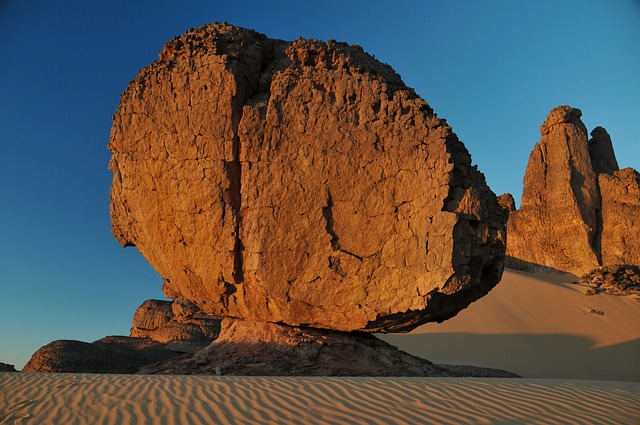
The Sahara gives Algeria both wealth and difficulty. It contains major oil and gas basins and offers huge solar potential. But desert infrastructure is expensive to build and maintain. Roads, pipelines, power lines, worker housing, water supply and security all matter.
The coast is just as important. Algeria’s Mediterranean ports allow oil exports, LNG shipments and energy trade with Europe. Cities such as Algiers, Oran, Arzew and Skikda sit near the country’s main industrial and export infrastructure. The northern coast is also where much of the electricity demand is concentrated.
This north-south energy geography explains many of Algeria’s choices. Gas and oil move from inland production zones to coastal export routes. Solar projects may be built in sunny interior regions, but they need transmission lines to reach demand centers. Desalination, ports, refineries and industrial zones increase the energy importance of the coast.
Algeria’s energy system is therefore not just about fuel. It is about distance, climate, water, population and export access.
Sonatrach, Sonelgaz and the State’s Role in Energy
Algeria’s energy sector is strongly shaped by state-owned companies. Sonatrach dominates oil and gas. It is involved in exploration, production, pipelines, LNG, refining and export strategy. Sonelgaz plays the central role in electricity and gas distribution.
This state-led model gives Algeria strong national control over strategic energy assets. It also allows the government to use energy policy as part of wider economic planning. Fuel prices, electricity prices, export contracts and infrastructure investment all have social and political importance.
Subsidies are a major part of this system. Domestic energy prices have often been kept low, which helps households and businesses but can also encourage high consumption. When energy is cheap, demand tends to rise. In Algeria, that creates pressure because gas used at home is gas that cannot be exported.
This is one of the country’s most important energy policy problems. Algeria wants to protect affordability and social stability, but it also wants to preserve export revenue and invest in new infrastructure. Energy reform is difficult because it touches household budgets, industrial costs and public expectations.
Energy Security in Algeria: Export Strength and Domestic Pressure
Algeria has a strong energy security position in one sense: it produces far more oil and gas than it imports. Unlike many countries, it is not heavily dependent on foreign fuel supply. Its domestic energy system is based mainly on its own resources.
But energy security is not only about having fuel underground. Algeria’s risks are different. The country must maintain production from mature fields, attract enough investment, manage domestic demand, protect export infrastructure and adapt to changing European energy markets.
Gas exports are especially important. Europe remains the key market for Algerian gas, whether through pipelines or LNG. That gives Algeria economic opportunity, but it also links the country to European demand, pricing, climate policy and competition from other suppliers.
Domestic demand is another major issue. If Algeria burns more gas for electricity every year, it may have less gas to export. This makes energy efficiency, solar deployment and grid modernization part of national energy security.
Algeria’s energy security challenge is not simply avoiding shortages. It is protecting the value of its hydrocarbon exports while building a more flexible domestic power system.
Hydrogen, Flaring and the Next Energy Strategy
Algeria is beginning to position itself for future energy markets beyond traditional oil and gas. Hydrogen is one area of interest, especially because Algeria has strong solar potential, existing gas infrastructure and proximity to Europe.
Green hydrogen could use renewable electricity to produce hydrogen for industry or export. Blue hydrogen could use natural gas with carbon capture, although that would require major investment and strong emissions management. Algeria’s existing pipeline relationships with Europe make hydrogen a strategic topic, even if large-scale exports remain a future goal rather than a current reality.
Gas flaring is another important issue. Algeria has been one of the countries with significant flaring volumes, and reducing flaring can improve efficiency, cut emissions and save gas that might otherwise be wasted. Better methane management is also important for Algeria’s reputation as a gas supplier, especially as European buyers pay more attention to emissions linked to imported fuel.
The country’s next energy strategy is likely to combine old and new priorities: more upstream oil and gas investment, more refining and petrochemical activity, more solar power, lower flaring and early hydrogen development.
The Main Energy Challenges Facing Algeria
Algeria’s first challenge is maintaining oil and gas output. Mature fields need investment, and new production takes time. If production weakens while domestic demand rises, export capacity can come under pressure.
The second challenge is electricity demand. A gas-fired power system works well when gas is available, but it can become costly if domestic power use reduces export volumes. Energy efficiency, better pricing signals and renewable power can help, but each requires policy choices.
The third challenge is renewable deployment. Algeria has world-class solar resources, but installed renewable capacity remains small compared with the size of the power system. Large solar targets need financing, land planning, grid connections, storage and reliable tender systems.
The fourth challenge is infrastructure. Algeria must maintain pipelines, LNG terminals, refineries, power plants and transmission lines while also building new infrastructure for solar and possibly hydrogen.
The fifth challenge is economic diversification. Oil and gas remain central to Algeria’s public finances and export earnings. A more balanced energy economy would reduce risk, but diversification is difficult when hydrocarbons still provide the strongest revenue base.
The Future of Energy in Algeria
Algeria’s energy future will be shaped by a central question: can the country keep its role as a major oil and gas exporter while using more renewable energy at home?
The most likely path is not a quick move away from hydrocarbons. Algeria will continue to invest in oil, gas, pipelines, LNG, refineries and petrochemicals. These sectors are too important to the economy to disappear from planning.
At the same time, solar power should become more important. If Algeria can build large solar projects and connect them to the grid, it can save natural gas for export, reduce emissions and support future industries such as hydrogen.
Nuclear power may remain a long-term option, but it is not currently a major part of Algeria’s power system. Coal will remain minor. The real contest is between domestic gas consumption and the growth of solar, grid infrastructure and efficiency.
Algeria’s energy system is therefore one of the most important in North Africa. It connects the Sahara to Europe, fossil fuel exports to domestic electricity, and old hydrocarbon wealth to a possible solar future.